Quick summary
- During Week Without Driving 2026 (October 1–8), Boulder Mayor Aaron Brockett, Mayor Pro Tem Tara Winer, and City Councilmember Tina Marquis rode along on Via Mobility Services paratransit trips.
- About one in three people in the U.S. can’t drive because of age, disability, income, or other reasons.
- Via Mobility Services is a Boulder-based nonprofit that has provided accessible transportation for older adults and people with disabilities since 1979, across eight Front Range counties.
Most of us don’t think twice about getting to a doctor’s appointment, the grocery store, or work. For thousands of older adults and people with disabilities in Boulder County, every one of those trips depends on someone else. During Week Without Driving 2026, three Boulder city leaders set their car keys aside to see what that’s like.
On October 5 and 7, Boulder Mayor Aaron Brockett, Mayor Pro Tem Tara Winer, and City Councilmember Tina Marquis joined Via Mobility Services riders, drivers, and staff on paratransit trips. Their goal was to experience firsthand how accessible transportation helps people stay independent and connected to their community.
What is Week Without Driving?
Week Without Driving is a national campaign that invites elected officials, community leaders, and residents to spend one week getting around without a car. Participants ride the bus, walk, bike, scoot, or ask for rides, and in doing so experience the barriers that nondrivers face every day.
Author and disability advocate Anna Zivarts, working with Disability Rights Washington, launched the Week Without Driving in 2021 to make nondrivers more visible. Now in its sixth year, the campaign includes more than 700 co-hosting organizations across all 50 states, Canada, and Australia. It is coordinated by the Nondrivers Alliance with support from America Walks and a national steering committee.
Who are nondrivers?
Nondrivers are people who can’t drive or don’t have reliable access to a car. They include older adults who have stopped driving, people with disabilities, young people, and people who can’t afford a vehicle. About one in three people in the U.S. are nondrivers, and in Colorado, 29.4% of residents don’t rely on a personal vehicle for daily travel.
The number of nondrivers is growing as our population ages. About 11% of people over the age of 65 no longer have an active drivers’ license, and many of the nearly 1 million Coloradans over 65 who do maintain their licenses may do so for reasons other than driving. Yet, most communities are still designed around the assumption that everyone drives.
Nondrivers are often invisible. Their absence shows up in missed medical appointments, missed shifts at work, and missed time with family when a ride doesn’t come through.
What did Boulder’s leaders experience on their ride-alongs?
Mayor Brockett sees door-through-door service up close
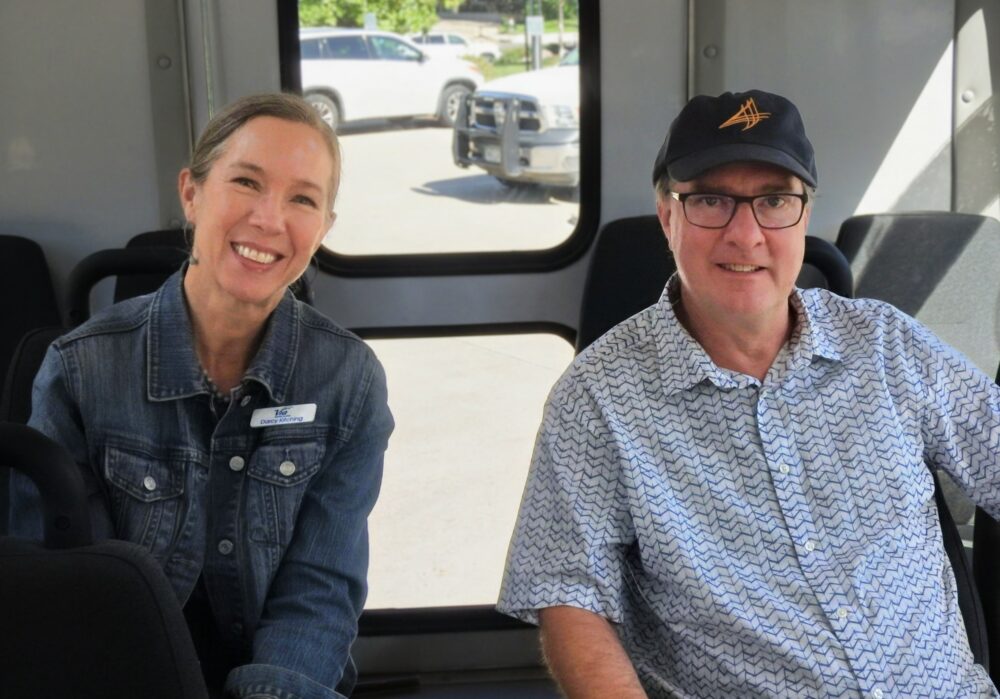
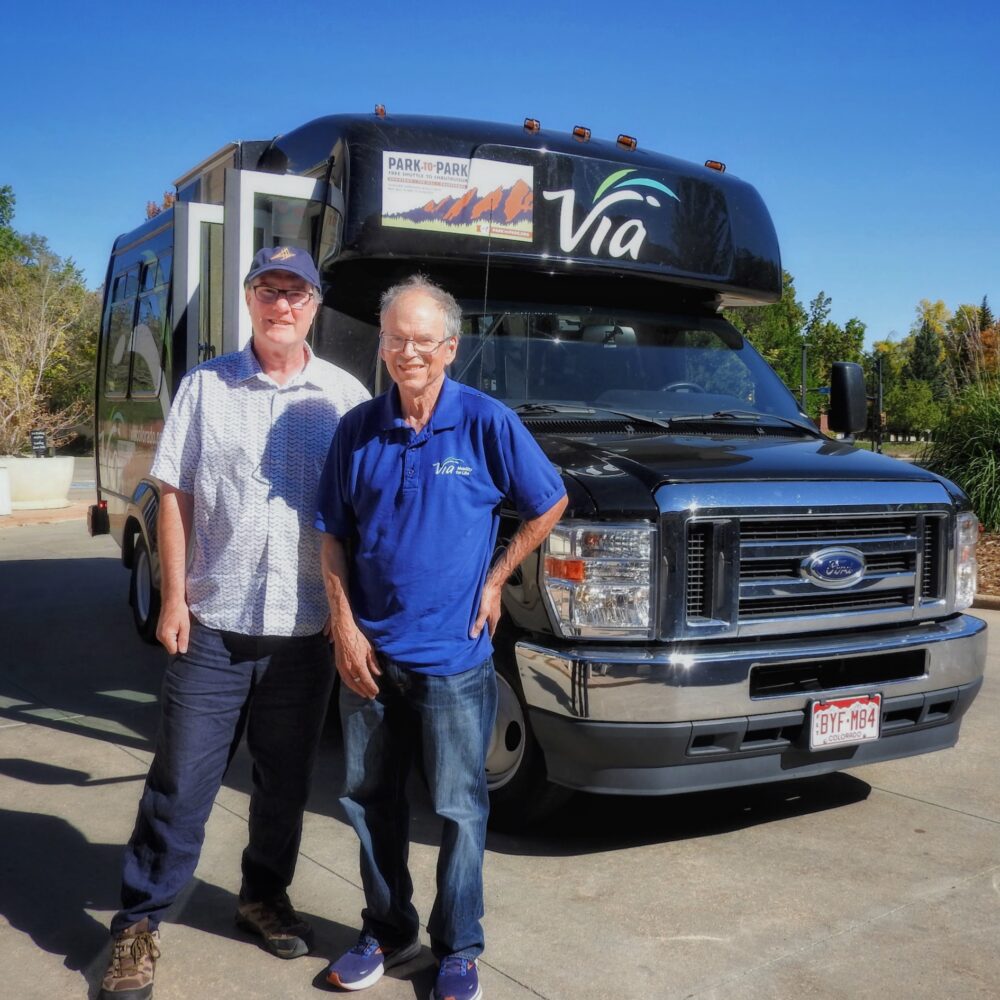
Mayor Brockett and his daughter, Brook, rode with Via Mobility Services team members Darcy Kitching and Eiko Kato to see how accessible transportation supports independence and keeps the community connected. During the ride-along, driver Mark Simon picked up a regular Via rider who uses a manual wheelchair and has significant mobility challenges. Witnessing the care with which Mark helped the rider into the vehicle and into his home at the end of the ride gave the mayor and guests a clear sense of the value of Via’s hands-on driver training and door-through-door service.
Council members ride with Via rider Terry Chapin
 Mayor Pro Tem Winer and Councilmember Marquis joined Via Mobility Services rider Terry Chapin on her way home from the local Age Well Center. During the ride, they chatted about how Via has enabled Terry to take classes, go shopping, and get to church.
“I tried using the bus,” Terry said, “but I have a physical disability that makes that hard some days. And the bus doesn’t get anywhere close enough to the rec center for me to walk from a bus stop even on a good day.” With Via’s help, Terry and other nondrivers get the support they need, when they need it.
The city council members also saw what sets paratransit apart from a typical ride. Not only do drivers with Via Mobility Services provide personalized through-the-door service, but they also provide a friendly, familiar presence week after week.
“The Via employees, including the drivers and people doing the scheduling are a great bunch of people,” rider Terry added. “They have really good attitudes and you can tell that they are there because they want to help people.”
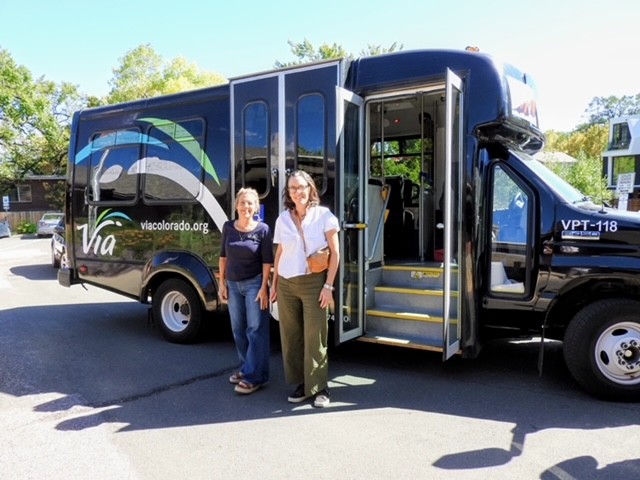
Reflecting on her ride-along, Councilmember Marquis said, “I noticed the comfort and trust of the passenger using Via for daily activities, like going grocery shopping or visiting the Age Well Center. When one’s mobility is already limited, I appreciated how Via provides a supportive and dignified service to help maintain independence for some of our community.”
How does Via Mobility Services help people who don’t drive?
Via Mobility Services is a nonprofit organization that has provided accessible transportation in the Boulder area since 1979. It now serves eight Front Range counties: Adams, Arapahoe, Boulder, Broomfield, Denver, Jefferson, Larimer, and Weld.
Via Mobility Services offers:
- Paratransit: shared rides with through-the-door assistance for older adults and people with disabilities
- Community and contract transit: local fixed-route, on-demand, and microtransit services operated in partnership with cities, towns, and RTD
- Mobility management: travel planning, education, and referrals that help people find the right transportation option
In 2025, Via Mobility Services provided nearly 700,000 rides, including almost 80,000 paratransit rides. As a community-based nonprofit, Via Mobility Services directs more than 85% of its resources to programs and reinvests its revenue into local drivers, safety specialists and trainers, mechanics, vehicles, and operating facilities.
Why does transportation access matter for the whole community?
When people can’t get where they need to go, the effects reach beyond the individual. Older adults may have to leave their homes sooner than they want to. Employers lose workers who can’t make it to their shifts. Families take time off work to drive loved ones to appointments.
Reliable, accessible transportation helps people age in place, keep their jobs, and stay connected to friends and family. Ride-alongs give local leaders a direct view of what their nondriving neighbors experience, information that can shape decisions about transportation funding, land use, and services.
Via Mobility Services hopes to make council ride-alongs an annual Week Without Driving tradition and to invite officials from other cities and counties to join in future years.
Frequently asked questions
When was Week Without Driving 2026?
This year, Week Without Driving took place October 1-8. Organizations across the U.S., Canada, and Australia co-host the campaign each fall.
What is paratransit?
Paratransit is shared-ride transportation for people over the age of 60 or who have a disability. Rides are scheduled in advance and pick riders up at or near their door.
What is through-the-door service?
Through-the-door service means the driver helps the rider from the door of their home to the vehicle and from the vehicle into their destination. It goes beyond curb-to-curb service, where riders must get to and from the curb on their own.
Who can ride with Via Mobility Services?
Via Mobility Services serves older adults, people with disabilities, and the public on its community transit routes. Eligibility depends on the service and location. Call Via Mobility Services at 303-447-9636 to find out which services are available to you.
How do I schedule a ride with Via Mobility Services?
Call 303-447-9636 or visit viacolorado.org to learn about scheduling a ride.
Learn more
To learn more about Week Without Driving, visit weekwithoutdriving.org. To learn about Via Mobility Services’ transportation options, visit viacolorado.org or call 303-447-9636.

Darcy Kitching, Ph.D., is a member of the Via Mobility Services team. Connect with Darcy on LinkedIn.
Related reading: